Slaughter-free meat? Scientists say it could save the world from another pandemic


Slaughter-free meat is being developed by start-ups from around the world. Photo: Instagram/Memphis Meats
Scientists say slaughter-free meat has the potential to save the world from another pandemic.
But telling people it will reduce animal cruelty and have a positive environmental impact – although true – won’t be enough to convince large numbers of consumers to switch to meat that is grown outside of an animal’s body, said Professor Johannes le Coutre, from the University of New South Wales’ School of Chemical Engineering.
Not only would it need to have the backing of regulatory bodies, he said, but to become the “new standard” it would need to be cheaper than traditional meat, consumers will need to like it, and it would ideally come with additional advantages such as demonstrated health benefits.
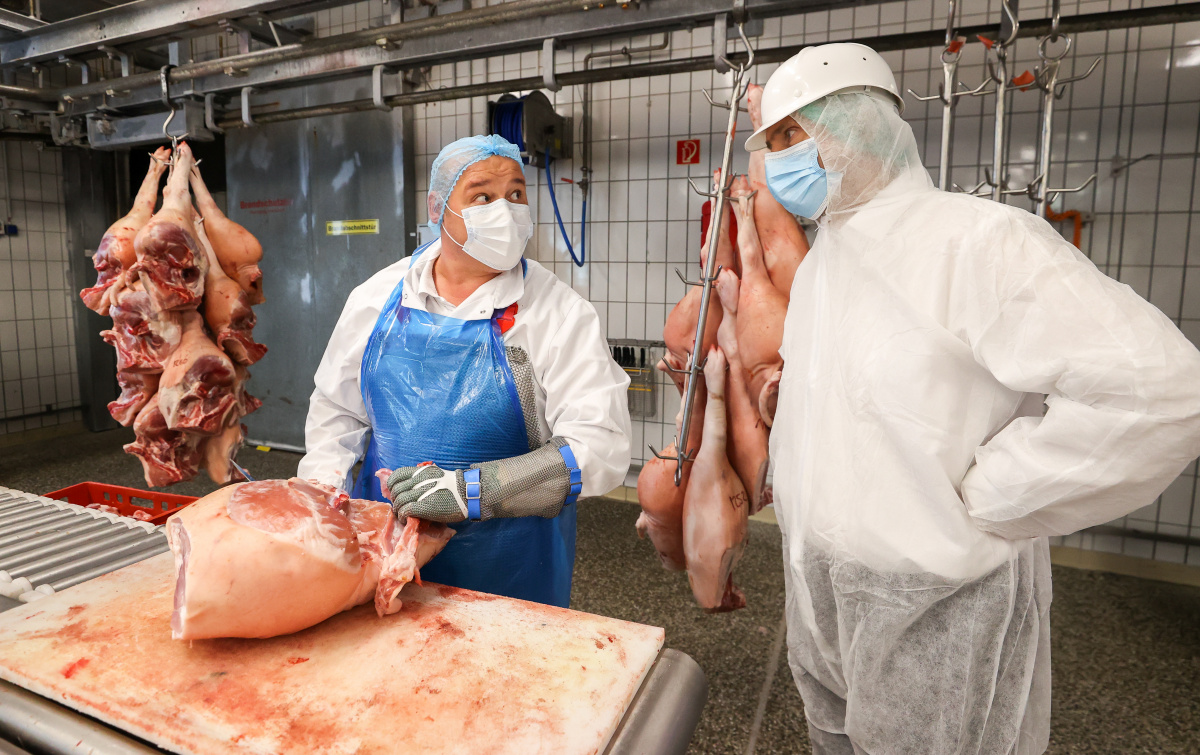
All that is still up in the air for now, but we can be certain that the technology and facilities used to make so-called ‘cultured’ or ‘cultivated’ meat “will be much less prone to amplifying pandemics the way our conventional factory farms and meat processing plants globally have been doing”, Professor le Coutre said.
While cultured meat is not yet available in supermarkets, the “proof of principle” has been made: real meat can be produced without killing animals, he said.
This alone has got People for the Ethical Treatment of Animals (PETA) excited.
In a statement to The New Daily, it said: “We at PETA can’t wait for ‘clean meat’ to hit the shelves.”
In her new documentary Meat The Future, Liz Marshall chronicled the growth of a US-based start-up called Memphis Meats, which in 2016 developed the world’s first cell-based meatball.
In 2017, a year after Ms Marshall started filming, two of the world’s largest meat companies, Cargill and Tyson Foods, become stakeholders in Memphis Meats.
“When something that monumental happens so quickly, you realise that the conventional meat industry sees the bottom line and the value in this food technology,” she said.
A vegan, Ms Marshall does not eat meat for ethical reasons but said she had no hesitation trying cultivated meat twice during the making of the film – and sees no dilemma with having it on occasion.
“It tasted exactly how I remember meat to taste. It was bouncy and chewy and salty. And you know, a little bit greasy,” she said.
Cell biologist Bianca Le, founder of Cellular Agriculture Australia, said Australia is well-placed to become a world leader in this alternative meat industry.
Like Professor le Coutre, she believes slaughter-free meat can prevent the next pandemic.
“The fact that we are eliminating the dependency on a large number of animals alone will reduce the risk of pandemics,” Dr Le said.
“And the fact that a lot of the production processes are happening in sterile conditions, that again will reduce the potential for large food-borne illnesses and diseases.”
Cultured meat is made in the laboratory, meaning no animals need to die. Photo: Getty
She explained that meat is made up of muscle cells, fat cells, blood cells and connective tissue, which contribute to not only the nutritional profile of meat but also the taste – the flavours, the mouthfeel, the textures.
Dr Le said cellular agriculture allows for an entirely novel product that can’t be compared to any existing meat products.
A small piece of meat that is roughly the size of an almond is taken from an animal. It will contain the muscle cells, blood cells, fat cells, and all other components that meat-eaters are used to ingesting, Dr Le said.
Those cells grow and divide in the animal’s body. She said scientists can now replicate exactly what goes on by dividing and growing those cells in food-grade facilities such as large bioreactors, similar to a brewery.
“You can create a new product that has the deliciousness of beef in terms of the meatiness, so keeping the muscle cells of beef but adding in fats from, say, a fish, so that we can get more healthy omega fatty acids in there,” Dr Le said.
She said it will also be possible to alter the number and type of fat cells that are in the final meat product.
“For example, red meat is known for being linked to a lot of cardiovascular diseases, type two diabetes, and that’s because of the proportion of saturated fats.
“With cultivated meat, we have so much control over what goes in this product, that we can actually reduce the amount of saturated fat and increase the amount of healthy fats,” Dr Le said.
But that is a long time away.
Professor le Coutre believes the earliest scenario is that cultivated meat is available as some sort of seasoning or soup stock or an additional source of protein.
The field is “overwhelmed by entrepreneurial start-up activities”, many of which will not survive, he said.
“We want to build up this industry, but it has to be standing on the shoulders of giants.
“Australia should continue to open the funding channels into this direction, big time.”
Want to see more stories from The New Daily in your Google search results?
- Click here to set The New Daily as a preferred source.
- Tick the box next to "The New Daily". That's it.


Vegemite’s new product proves mitey divisive


Turns out, you might enjoy eating insects


People are going dotty for this viral cake trend

